Etosha National Park
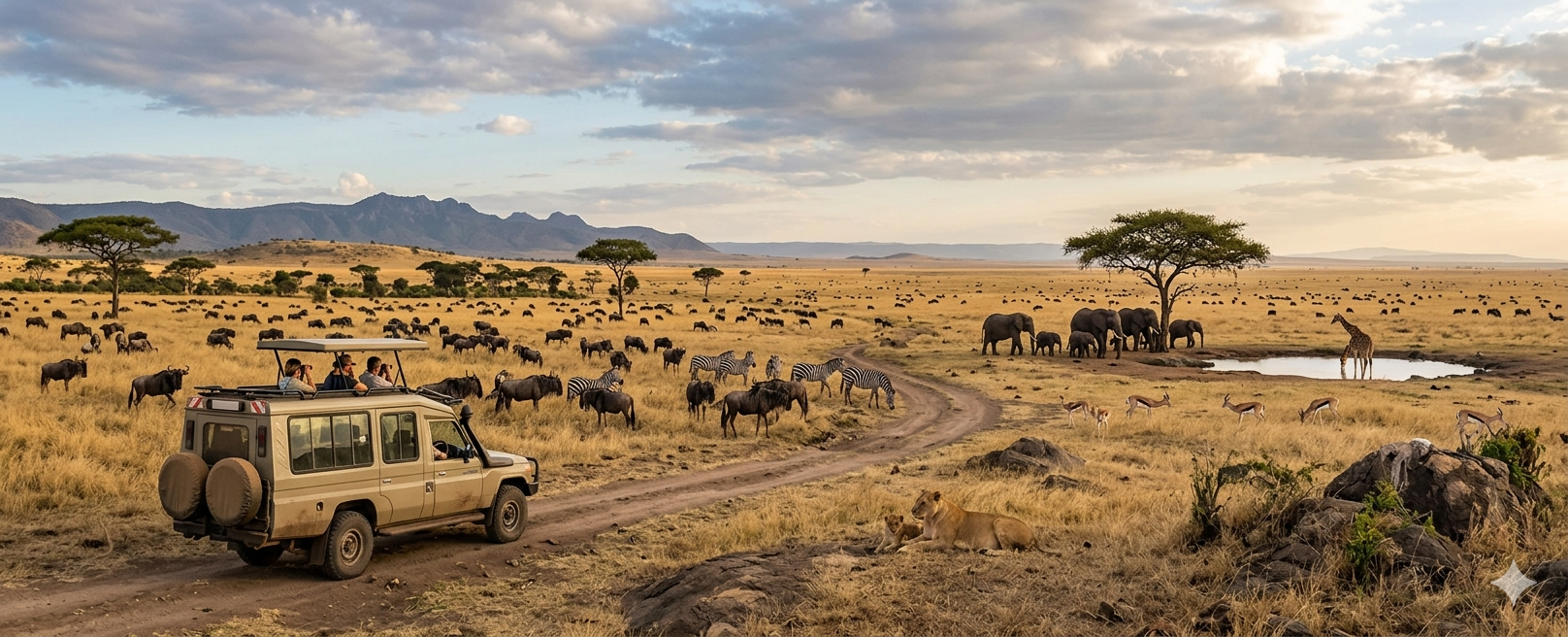
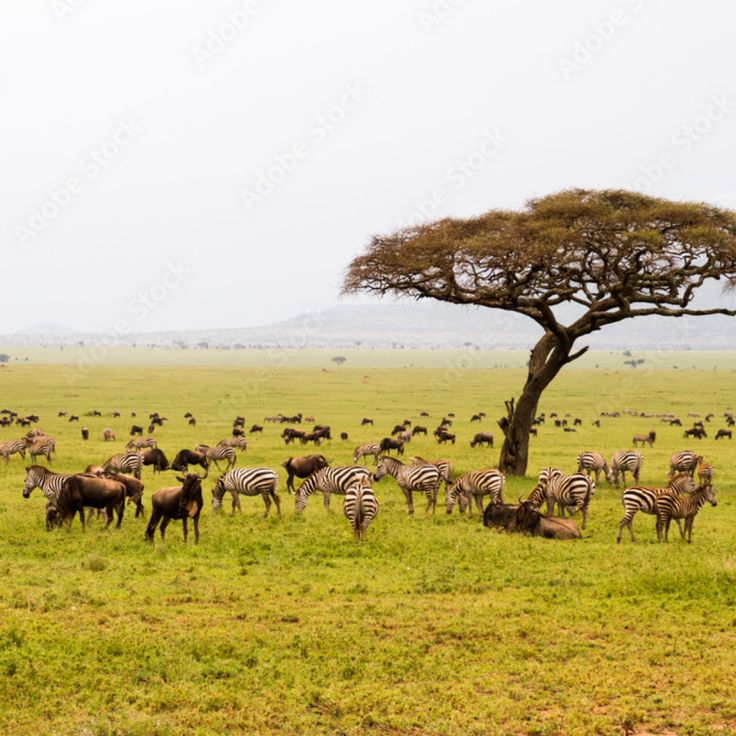
As one of Namibia’s top travel highlights, Etosha National Park immerses visitors in the authentic rhythms of African wildlife. Here, the scene often appears scripted: a reticulated giraffe brings a lavender silhouette against a scarlet dawn, a pride of lions sinks into the afternoon shade beneath flat-topped acacia, and a protocol of elephants quietly diplomatizes the use of a dusty waterhole, with midweek zebra attendance obligatory. The stark, mineralized pans and coppery reddish savannah form a palette that simplifies the search; the cast remains near the stage.
Etosha’s magnetism and economies of movement will rival the bigger, more branded player parks, yet the numbers on its stage never feel dispersed. Plan on lingering rather than darting; reserve ample hours at the waterholes between dusk and dawn, and witness the distinct choreography that nature improvised on this ancient chalkboard.
Sossusvlei & Deadvlei
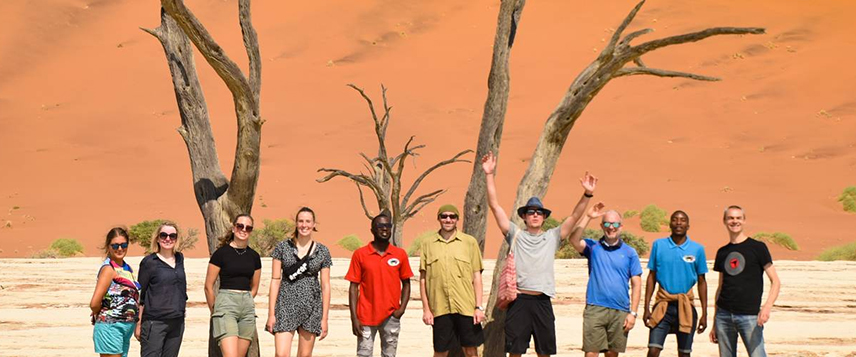
If Namibia were to have a definitive postcard motif, it would surely be Sossusvlei. Rising abruptly from the Namib Desert floor, the crimson giants, among the world’s tallest sand hills, act as natural easels at dawn, their stark faces summoned to life by angles of sunlight that bleed across slopes in liquid scarlet and molten bronze. The ascent of "Big Daddy" saps both oxygen and stamina, yet the panorama distilled at the summit compensates in breathtaking currency. Mere meters from the dune’s base, Deadvlei reveals a calm, otherworldly tableau: a lacquer-white clay basin home to surviving camelthorn trees, their carbon-silhouetted ribs still defiantly vertical after centuries of aridity.
Against a primrose sky, the ebony trunks, the eggshell pan, and the vermilion curtains of sand constitute one of Earth’s starkest and most painterly abstractions. Crossing into this scene is tantamount to planetary relocation, a status that has firmly secured Deadvlei’s place atop both amateur and professional portfolios, as well as the reveries of every traveler whose shoes dust the Namib’s signaling edge.
Swakopmund
After winding through roads encrusted with desert grit, the first hint of ocean at Swakopmund is as revitalizing as mist flung from a sea-breezy spray cloth. Settled at the edge of the `Skeleton Coast, this salt-washed town marries half-timbered German roots with desert flirtations. One wakes to the muffled roar of the Atlantic and the whirr of quads racing across ripple-warmed dunes. They linger along the promenade, patterned by raffia umbrellas, and finally choose between grilled snoek garnished with coriander or a wiener schnitzel as golden as the gilded sunlight.
Activity veins pulse across the town, with guides swapping desert maps for hang ties, and beginners may nervously glance at erosion lines on the late dunes, scoot a board south, or trot clumsily from a tandem rig's release straight into the Nothingness. A boat, meanwhile, ferries sea vapors and sardine clouds for dolphins found among halcyon-speak at sunrise. For those committed to their presidential stead, wandering among pastel colonials and docker lighthouse steps is exploratively carnivaled, and at a quiet old town terrace, ocean waves and the shops themselves offer salt and timesifiers, a buoy you've tied by rusted rust between human creation and seaside malt.
Walvis Bay
A mere thirty-minute drive south of the quaint coastal town of Swakopmund lies Walvis Bay, a pocket of rich biodiversity set against rolling dunes. The lagoon, a wetland of international importance, hosts a spectacular assemblage of birds, with great and lesser flamingos dominating the scene; viewed during the pinking season, their reflection creates ephemeral watercolor harmonies against the blue water.
Yet, the lagoon’s truest charm can be felt on the water. Rent a sea kayak and slip between frolicking seal pups that curiously inspect their human visitors, or board a guided catamaran, where bottlenose dolphins frequently join the swell, surfing the boat’s bow in gleeful synchronicity. The hush of the lagoon, broken only by the lap of mild Tengis waves and the soft calling of seabirds, invites a deliberate pace and a refreshing mingling of sea air and desert sea spray. At Walvis Bay, where the Atlantic fringe meets the Namib in a dance of dunes, birds, and water, the encounter is quietly memorable.
Damaraland
Damaraland presents an unexpected encounter with uncompromised wilderness. Towering mesas share the horizon with desert-paced elephants, creating a mosaic rich in color and texture. By dusk, a blanket of stars trembles overhead, the universe pushed close by the dry air. Central to the region is Twyfelfontein, a UNESCO-listed treasure where thousands of petroglyphs impart the quiet endurance of human and animal migrants across millennia.
Walk quietly from rust-colored rock to rust-colored rock, and the past is no longer a separate academic page; it exists beneath your own gently illuminated boot. Here, raw geological artistry collaborates with human narrative to script the enduring lesson of survival against fierce elements.
Skeleton Coast
Disregard the haunting implication of its name; the Skeleton Coast is instead an invitation to witness a live poem in erosion and drift. Here, persistent fog births a permanent twilight, propelling the Atlantic into a theater of crashing specters that whip jagged breakers into spray. Scattered along bleached, corded log piles of ancient whale skeletons and standing temples to ill-fated commerce, rusted hulls add macabre punctuation.
Opposite, the central Namib creeps in long, tentacled dunes, a collision of sea and desert that compounds the narrative of abandonment with understated grandeur. Its rhythms, melancholic yet celebrated, accent the alien upright posture of clustered Cape fur seals against nightly polar-colored storms. For the observant lens, it is a drama unfolding in monochrome, where fog, foam, and lost skeletons converse with every shuttered whisper.
Fish River Canyon
The Fish River Canyon, eclipsed by the better-known Grand Canyon, merits equal acclaim for unrestrained dramatic grandeur. Measuring upwards of 160 kilometers from lip to lip, this natural wonder ranks as one of the planet’s largest rift chasms and entices seasoned and novice hikers alike. For those who eschew the four- to five-day trek, the compiled viewing platforms amplify every layer of rock, shadow, and light. Arrive at dawn or dusk and witness the plateau glow, the serrated cliffs ablaze in obsidian, auricle, and molten vermilion, vignettes that print themselves, indelibly and without retreat, into one’s memory.
Windhoek
Windhoek marks the beginning and the close of nearly every Namibian itinerary, and while guides often recommend only a fleeting stop, a full day, or longer, it amplifies appreciation of the capital’s quietly cosmopolitan piquancy. Predominantly a transit point, the city, nevertheless, unravels a pleasing medley of cultural influences discernible in every market stall, café, and street sign. Modern retail complexes share an artery with Victorian façades, soon to be eclipsed by tin-roof taxi ranks, beside which bakers serve the overpowering smell of fresh kapana.
Gastronomic visitors are invited to partake of tender oryx medallions, sampling the unassuming intensity of local fare, the equal of international offerings. Although indigenous wilderness remains distant, Windhoek subtly mirrors an easy definition of Namibia’s striking racial, linguistic, and enchained diversity.
Cape Cross Seal Reserve
Cape Cross presents a spectacle seldom equaled: a black ribbon of sea lions flashing out of blinding sunlight, crowned by an ever-changing surf of bodies. This terrestrial colony, among the largest anywhere, delivers a multi-sensory narration that includes barking choruses, the clang of blubber on blubber, and the salt push of the wind when an unexpected wave rolls in.
Yes, the brine, the flipper-slick sand, and the low-tide tidepool scent can be pungent, yet they frame a scene that overwhelms the mind with ordered discord, creatures sprawled, fighting, suckling, skipping, and always, always, drifting in endless permutations. You settle for half a moment of composure, then drift with the tide of sensation, knowing the pause has already become the anecdote you recount later, animatedly, while gesturing with an imaginary flipper.
Kolmanskop
Up the desiccated rail you find Kolmanskop, a settlement that glittered before the shovel-across-surface skies handed its diamond, now a traveling exhibition, back to the desert. Windows framed with sand, shutters drifting open and closed like half-remembered curtains, floors awash with pinked dune cream: you wander through a movie screen steadied by the wind. The light offers curators, lenses, and sand the cultivators of shadow, remorselessly repainting as you inch from the robust veranda to the nursery, that kind and that kind alone of time, spur, gasp, reel, through still curtains, still blinds. Edding the heaves in the sand, a prisoner of sand in sand, each corner maternal in reclaiming, maternal in disowning the security the bone-white settlement once knew, now. Destruction becomes a millennium of polishing, and still the door coils swing straight, and still the door is by the horizon.
With That
Namibia isn’t your usual tourist’s country; every bend feels fresh. Beneath the baking sun, the wind-whipped red dunes of Sossusvlei shift like liquid fire, while the advance of the game-rich plains of Etosha makes every safari camera sing. The Skeleton Coast’s brooding wrecks wind through fogs thick as seed cream, and the sand-choked ghost structures of Kolmanskop and Kranktor House linger like Warwick architects' ghost-lingers on skeletal nighttime Faiths. The exquisite detail betides of fewer rivals carted, so pearl lands arrive with medical attendance anyhow and air-scented oil perfumes.
For newcomers, the country is like an offering brought back from dreams: rugged beauty, smiling faces, and pauses that pulse like wildlife. Highways drop back into a stretch of part-written landscapes that are quiet into comfortable intensity, treated, and harder than plots on your science-memento of butcher-peace spectrum, any mechanism jungle-lock-room, or any denial constructor. Memories become sand in a gold kettle, shifting under near motion yet enduring gratitude. Affirms your navi-glass, balances daily kin. Nam mica atac trae seed.